
80% of IPL sponsorships aren't logo deals. So why is every report about logos?
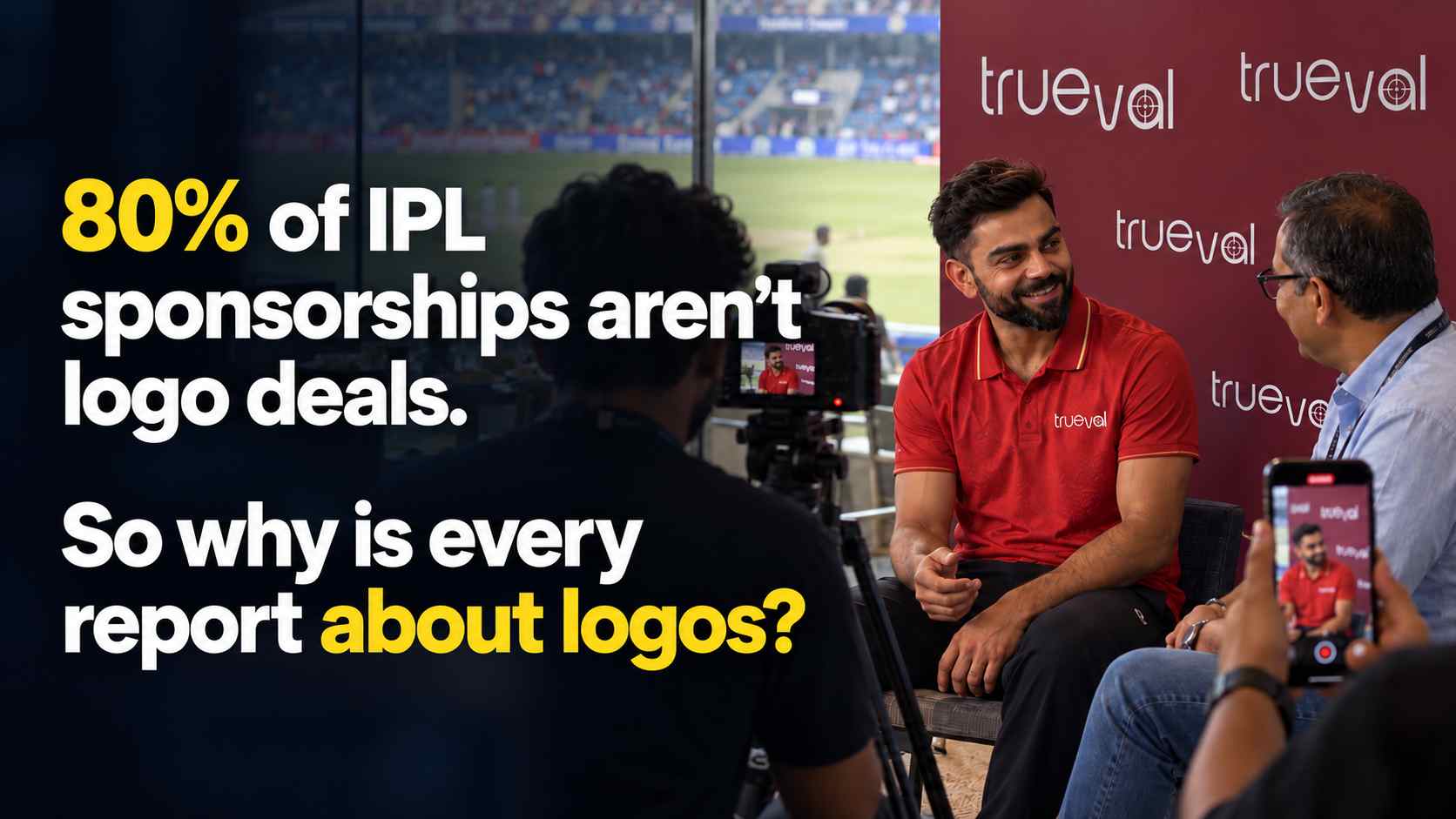
More than 80% of IPL 2026 sponsorships were not logo sponsorships in any meaningful sense. They were associations built around access, players, content, hospitality and presence. Yet every sponsorship report I've ever been handed starts and ends in the same place: the broadcast. It counts the seconds a logo was on screen, puts a number on them, and stops.
That leaves out most of what a typical IPL deal actually contains. A standard association carries anywhere between eight and fifteen deliverables that never appear on a scorecard of screen time. They're in the contract, they're paid for, and in most cases nobody ever puts a value on them.
Half of every IPL deal is measured wrongly. The other half is just assumed.
I've spent nineteen seasons negotiating these deliverables on behalf of brands, so I know how much of the commercial conversation they take up. What surprised me, when we started measuring them properly at TrueVal, was how much of their value sits in places nobody thinks to look.
What does an IPL deal contain that never reaches the broadcast?
Far more than most marketing teams keep track of. A typical association, depending on the team and the tier, will include some combination of the following.
Access. VIP and hospitality boxes, general match tickets for every home game, practice session access for trade partners and dealers, and sometimes a named stand at the team's home ground.
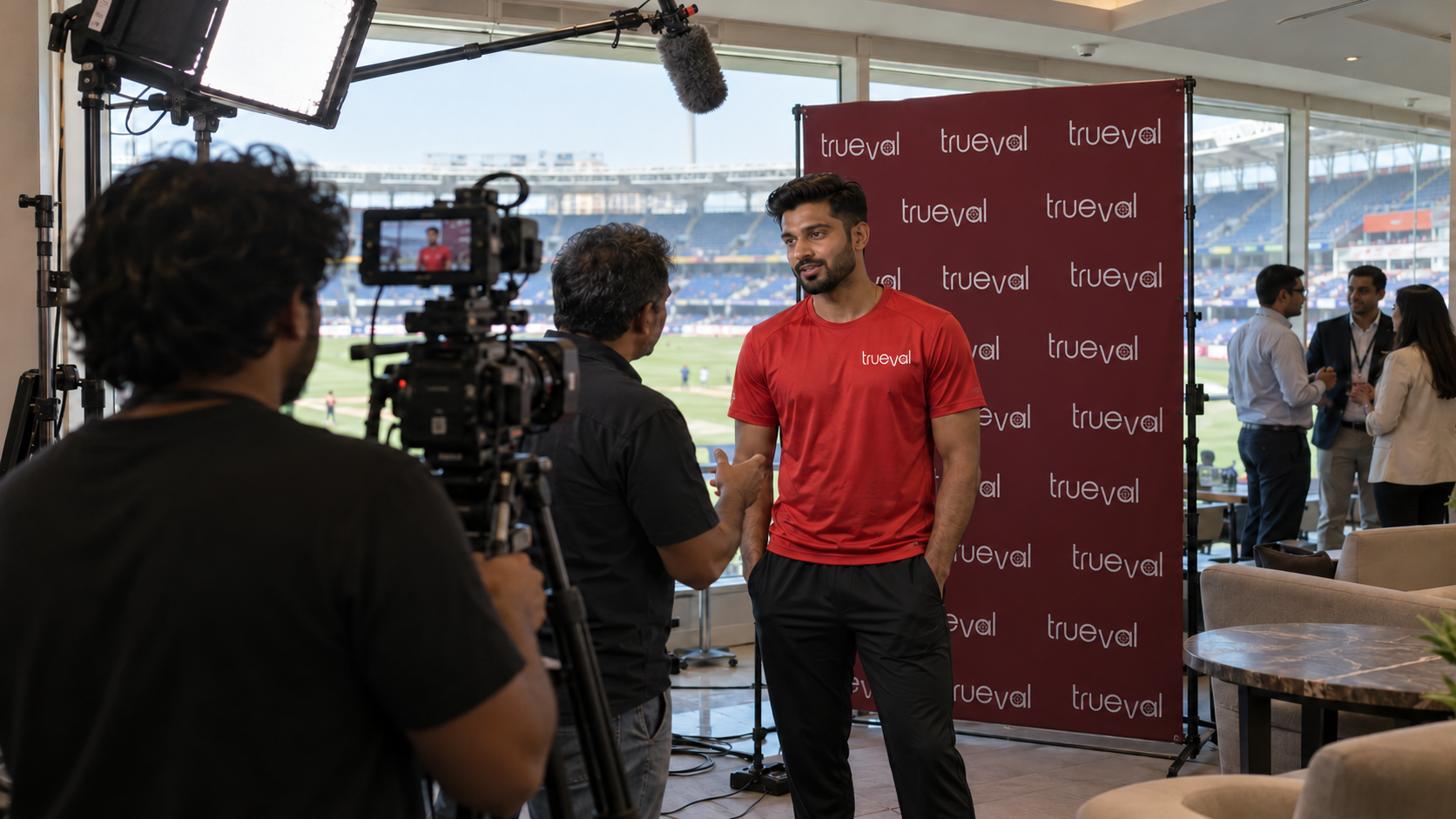
Players. Shoot days for a TVC or a campaign, rights to player imagery, appearances at brand events, and meet and greets for customers, employees or trade partners.
Content and channels. Posts from the team's official handles, co-branded content series, placement on the team's website and app, and the coverage the team's own channels generate around the brand.
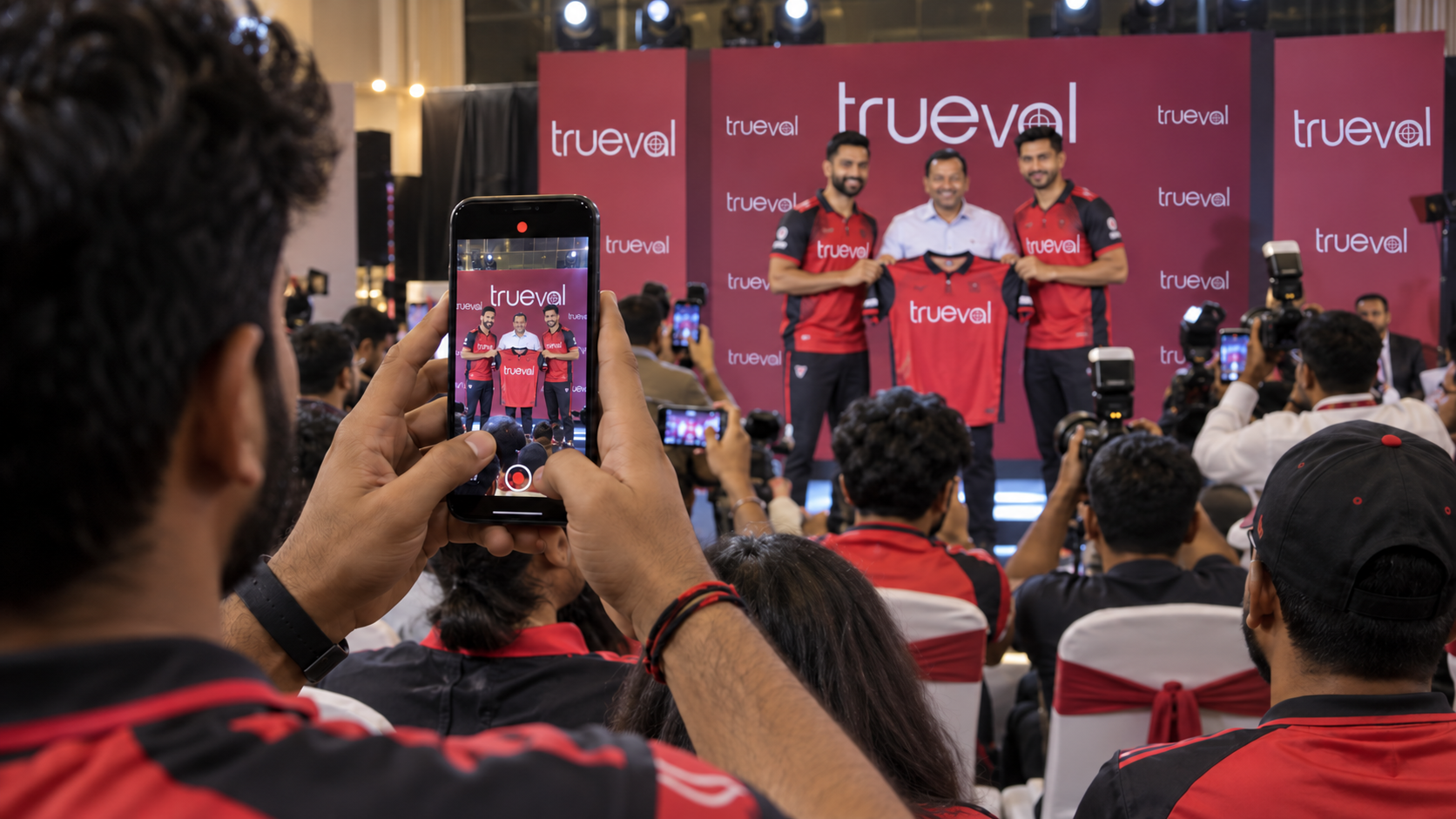
Moments and memorabilia. Presentation rights at selected matches, signed bats and jerseys, and launch events such as jersey unveilings and press meets.
The lift on your own advertising. This is the one almost nobody counts. When a brand runs its own digital campaigns using the team's players, jersey or logo, those ads usually perform better than the brand's regular ads. People click more on an ad that carries a team they support. For one brand we measured, ads using IPL-related imagery delivered an 18% higher click-through rate over three months than the same brand's ads without it. That extra response isn't something the team delivers directly, but it only exists because of the association, and it's real value the sponsorship is creating in media the brand was going to buy anyway.
Each of these has a real market value. A player appearance has a going rate. A hospitality box has a ticket price. A team's Instagram post reaches a measurable number of people. Put together, they can be worth a substantial share of what the brand paid for the whole association.
Why does almost nobody measure it?
Partly because it's genuinely hard work, and partly because nobody is incentivised to do it.
There is no common format. Every brand that tries ends up building its own spreadsheet, with its own assumptions, so no two answers can ever be compared. The team, when it sells the package, values the deliverables at its own number, and that number rarely comes with any reasoning behind it. And once the deal is signed, deliverables tend to get treated as goodwill extras, a few tickets and some player time thrown in, rather than as paid-for assets that should be accounted for line by line.
The result is that a marketing head can usually tell you how many minutes their logo was on screen, but not what the player shoot, the hospitality boxes and the team's social posts were worth, or whether they were delivered at all.
What we found when we measured one deal properly
We recently measured every off-screen deliverable for the principal sponsor of one IPL team in 2026. I'll keep the brand and the team private, but three findings say more about this half of sponsorship than any argument I could make.
The brand's own brief missed a deliverable it was getting. When the brand shared its list of deliverables with us, one was missing. Cross-checking the team's home-ground stand plan, we found the brand also had a named stand for four home matches. It wasn't in the brief because nobody on the brand side was tracking it. If the sponsor doesn't know what it bought, it certainly can't value it.
The single biggest social item never mentioned the brand's name. We scanned more than 1,100 videos and Shorts the team posted during the season, checking every title, description and tag. Only one named the sponsor. But the most valuable piece of social content in the whole deal was a different one: a short from the sponsorship launch, viewed more than 50 lakh times, where the brand's backdrop filled the frame and its name appeared nowhere in the text. Any tracker searching for the brand's name would have missed it entirely. We found it because we looked at the content, not just the captions.
Most of the PR value came from where nobody would have looked. The launch generated more than thirty pieces of coverage across news sites, trade publications, YouTube channels and Instagram. The trade and regional sites, which is where most brands look for coverage, delivered very little audience between them. Meanwhile, a single fan-made reel of the jersey reveal, from an individual account, drew close to 20 lakh views and carried most of the PR value on its own. And several of the biggest stories about the launch didn't name the sponsor at all, so they couldn't be counted.
The value of a deliverable is rarely where the contract says it is. You only find it by going and looking.
We were just as careful about what we left out. Content posted on the brand's own channels was excluded, because that's the brand's own media, not something the team delivered. What does count is the lift the association gives that media: the difference in how the brand's ads perform when they carry the team's assets. And moments that also appear on the broadcast, such as a toss or a player-of-the-match presentation, have to be counted once and only once, or the report ends up valuing the same moment twice.
What decides what a deliverable is worth?
I'm not going to publish the valuations themselves, for a reason I'll come to. But the things that drive them are worth understanding, because they're the same things a brand should be asking about before it signs.
What it would cost to buy on its own. Every deliverable has an open-market equivalent: what a brand would pay for that player's appearance, that box, that audience, if it went out and bought it separately.
Whether it was actually delivered. A contract that promises a post before every game is only worth that if the posts actually go up. Ours checked all of them.
How well it was used. A player day that becomes a year of campaign content is not worth the same as a player day that becomes a single photo opportunity. The deliverable is the same. What the brand does with it isn't.
Who it really reached. Not the follower count of the account, not an assumed audience, but the actual views on the actual content, wherever that content ended up.
Whether it's already been counted. The difference between a rigorous report and an inflated one is often just this: making sure nothing is valued twice.
Why we don't publish how we value each one
Because that's what our clients pay us for. Over the last few months I've shared a great deal of how TrueVal thinks about sponsorship: what Return on Sponsorship is, why the same jersey spot can return very different amounts, why standard reports find a bigger number by measuring less, and how small artwork changes added more than ₹1.5 crore of value for three brands in IPL 2026.
The way we value each off-screen deliverable, consistently and defensibly, across every kind of IPL association, is the part that stays inside the report. What I can tell you is that it's done item by item, against defined methods, with every assumption written down, and that it treats the off-screen half of a deal with the same rigour we apply to every second of the broadcast.
Why this matters before you buy
The deliverable schedule is often the most negotiable part of an IPL deal. The headline fee for a position tends to move within a narrow range. The deliverables underneath it move far more: more player time, better hospitality, a co-branded series, an extra presentation moment. A brand that knows what each of those is worth can trade them intelligently. A brand that doesn't is negotiating blind on what may be the larger half of its return.
It's also the only way to compare deals that look nothing alike. A jersey position is mostly screen with a deliverable tail. An associate partnership might be barely on camera and almost entirely deliverables. Return on Sponsorship puts both halves on the same scale, so the two can finally be judged against each other.
Before you sign, ask any proposal on your table these questions.
Which deliverables are included, item by item, and in what quantities?
What is each one worth, and how was that figure arrived at?
Which of them overlap with what's already valued on the broadcast?
How will delivery be tracked and reported through the season?
What happens to the value of the deal if some of them are never delivered?
If the answers come back as a single headline number, you're looking at a sales figure, not an honest evaluation.
Before IPL 2027
Most IPL 2027 proposals will arrive with a long list of deliverables and very little sense of what they're worth. If IPL 2027 is on your plan, talk to us while you plan. Through JAS, we'll find the right team and position for your brief, negotiate the deliverables as hard as the fee, and put Return on Sponsorship on every option, with both halves of the deal accounted for. Then we measure what you actually receive, on camera and off it, all season.
Because the half of your sponsorship that never reaches a camera is still half of what you're paying for.
Amit Verma Founder, TrueVal